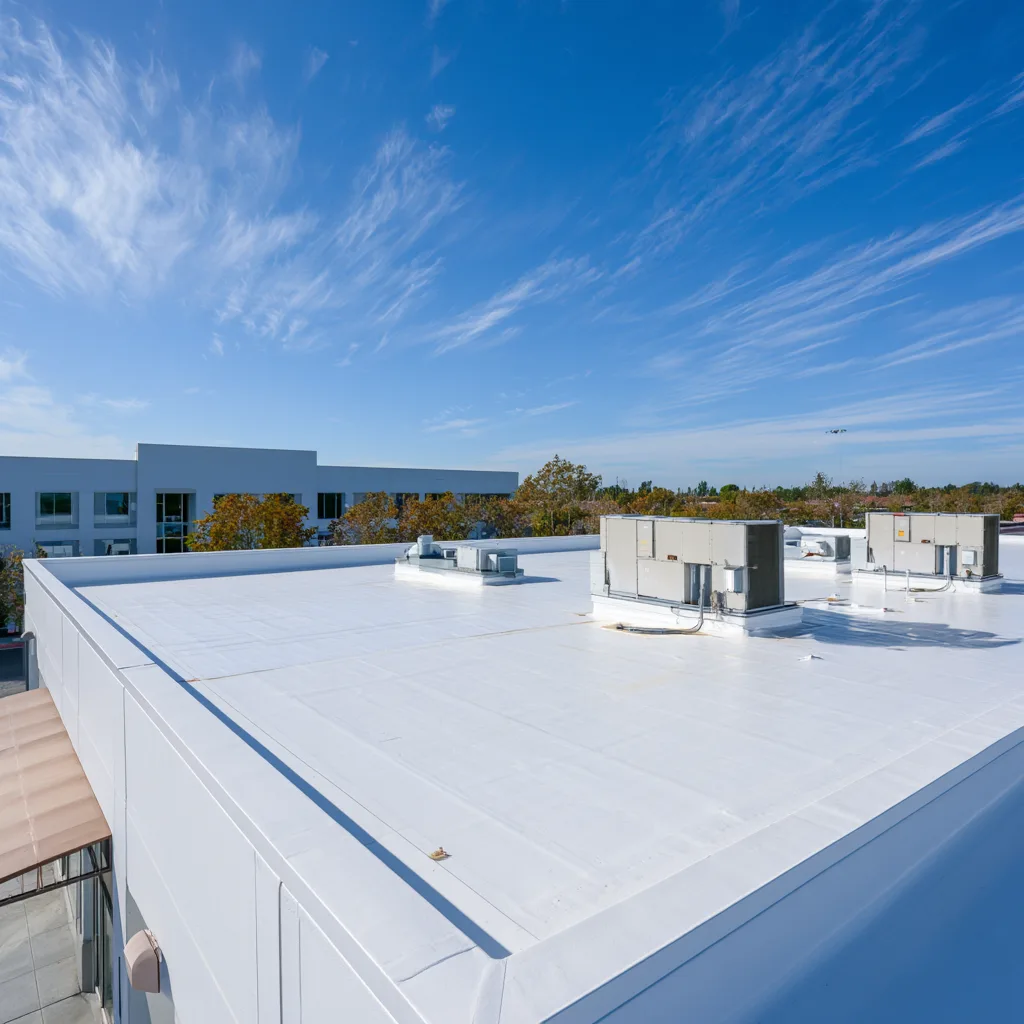
Commercial Roofing Along US 380 in Princeton
Membrane, metal and coating help for the retail centers, offices and new buildings along Princeton Drive, with occupied spaces and access considered in the scope.
Low-slope roofs on Princeton’s US 380 frontage
A water stain over a sales floor on Princeton Drive puts the roof and the business below it in the same conversation. On a low-slope building, the investigation includes membrane seams, rooftop units, drains and parapets. Access planning also has a local wrinkle: work at US 380 and Beauchamp Boulevard began in October 2025, and Princeton Town Center’s Kroger broke ground in July 2026. Current road access and deliveries need to be considered when roof work is scheduled.
Nearby construction is a reason to check the actual roof for accumulated debris, not proof that a drain is blocked. Material reaching a strainer or scupper can restrict drainage, and retained water can add load and expose defects. The inspection should establish what is present, how water reaches the outlets and whether the roof details or supporting assembly need work.
The commercial roofing pages explain how membrane, coating and flat-roof repair decisions are made for a specific system, and which roof records help an owner plan future work.
Where a corridor roof gets interrupted
An inspection on a strip center or freestanding store concentrates where the surface stops being continuous.
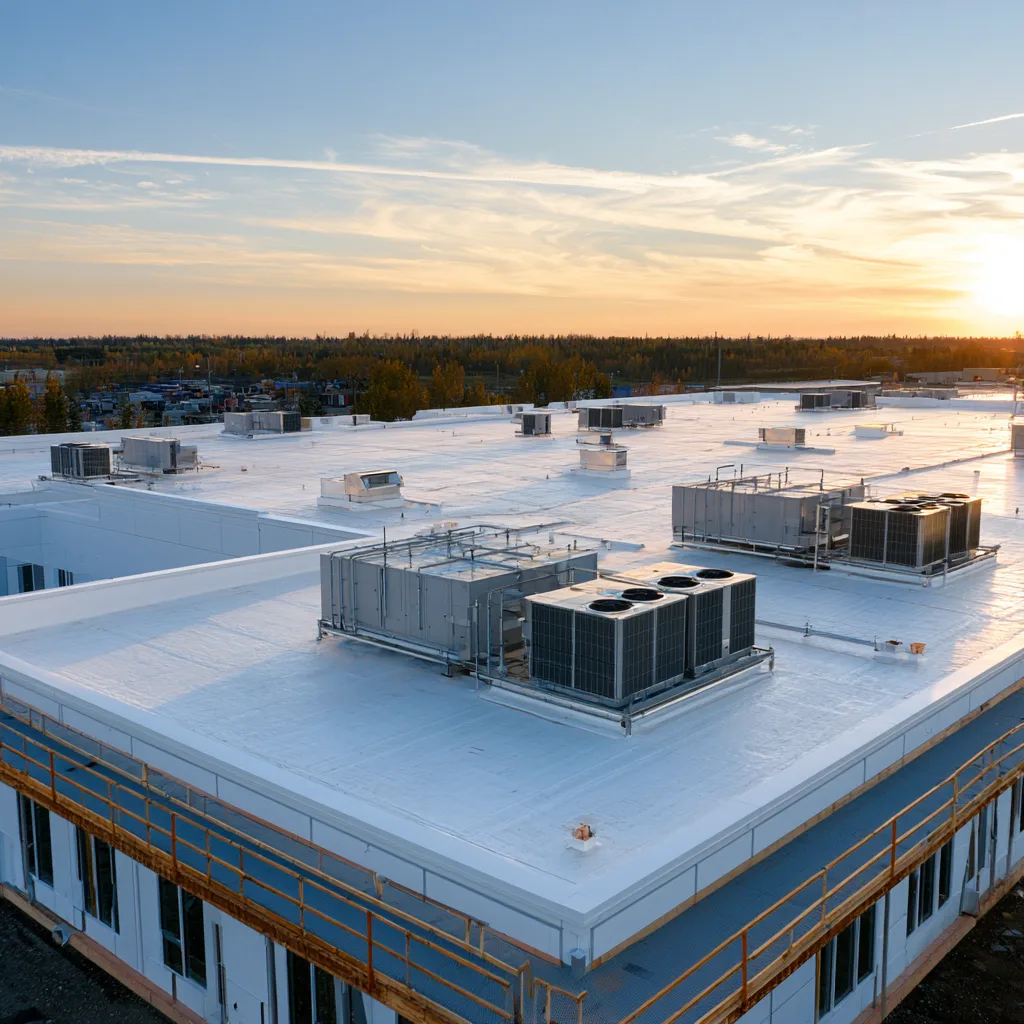
Curbs and rooftop units
Each tenant’s air-conditioning unit sits on a curb flashed into the membrane, and service technicians walk the same route to it on every visit. Worn membrane on that path and a curb flashing that has pulled back are the first places to look when a leak appears below a unit.
Drains, scuppers and overflows
A low-slope roof needs a working drainage route. A blocked strainer, poorly placed outlet or low area can retain water; overflow provision and supporting conditions also matter. The investigation checks the depth and location of retained water and the reason it remains, rather than assuming every puddle has the same cause or repair.
Parapets and edge metal
The wall around the roof edge is where the membrane turns up and terminates. Wind gets under edge metal that has loosened and starts a peel from the perimeter. A coping cap with open joints lets water into the wall behind the parapet, and it shows up inside a long way from the roof edge.
Metal canopies over the storefronts
A standing-seam canopy along the front of a center sheds water fast into a gutter or onto the sidewalk. Its fasteners and end laps age differently from the membrane behind it, and where it ties into the parapet is a transition the flat roof repair conversation should include.
Roof work and the occupied building below it
Tenant operations, deliveries, equipment access and customer entrances all matter when roof work is planned. Some projects can be phased while a building remains occupied. Others need temporary restrictions or interruptions because of the work method, exposure or conditions found. The sequence should explain what is affected and how opened areas will be protected.
The existing system determines how a repair can connect. A TPO roof typically uses compatible heat-welded details where the material and assembly permit them. Coating suitability also depends on product compatibility, adhesion, attachment, moisture, supporting materials and drainage. A moisture check is part of that investigation, not automatic approval for restoration. The roof coatings page explains the preparation and limits.
Tenant by tenant, unit by unit
The scope should identify affected roof sections, equipment and occupied spaces. Any necessary shutdowns and their sequence need coordination with the building’s operations. Weather and concealed conditions can change the timing, so a proposed schedule is not a promise of uninterrupted service.
Access and protection
Where the ladder or lift goes, where materials stage, and how the sidewalk and parking below are protected are settled before the crew arrives, not on the morning of.
The roof file
System details, warranty terms, repair dates and available completion records make future roof decisions easier. A new building may have those in its closeout documents. For an older building, an inspection adds current findings to whatever history remains; it does not predict an exact replacement date.
New construction, older centers and the roof file along US 380
A new building approaching handover, an older shopping center and a property changing tenants each start with different roof questions. The useful records and inspection scope follow the building’s stage and roof system.
| Your building | The roof question | A useful first step |
|---|---|---|
| Delivered new in the last few years | Whether the manufacturer’s warranty was registered and what its terms require, and whether construction traffic left damage at the curbs before the tenants moved in | Review the available closeout and warranty information alongside the roof’s current condition, including any concern noticed before occupancy. |
| An older strip center with several tenants | Whether the leaks are separate details or one roof reaching the end, and whether restoration is still on the table or the insulation is already wet | Assess the membrane, supporting layers, attachment, moisture and drainage before deciding whether repair, coating or replacement fits. |
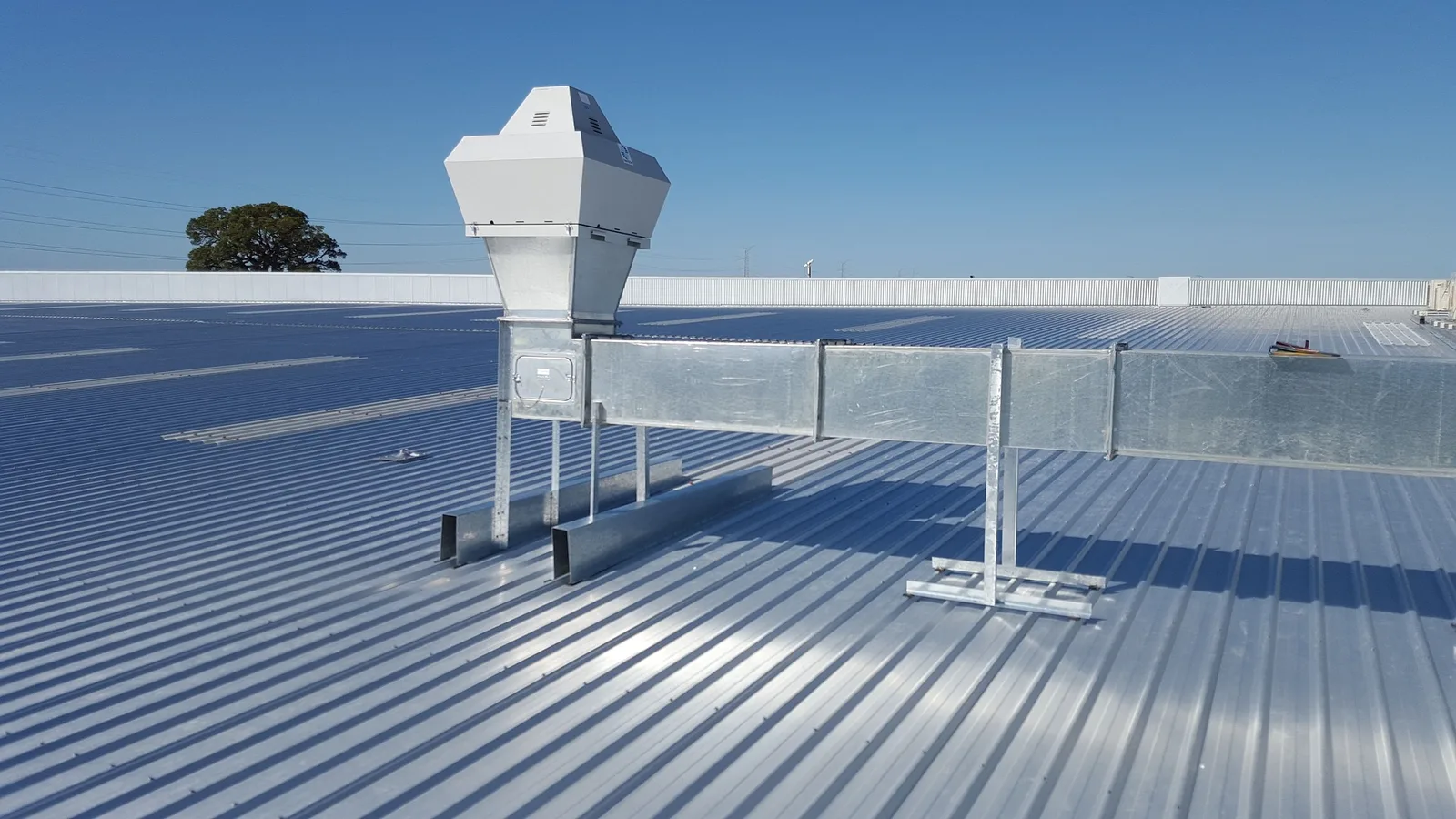
| A freestanding store or office with a metal roof | Panel condition, seams, fasteners and transitions to other roof sections, with attention to the specific metal system. | Inspect the current concern, panel condition, fasteners, laps and transitions. Include any known storm or previous repair in the roof history. |
| A building changing tenants or use | Whether new equipment needs new curbs and whether the roof can carry another penetration cleanly | Plan the curbs and flashing with the fit-out, not after it |
US 380 corridor roofing FAQs
Can you work on a center with several tenants?
Commercial roofing requests for multi-tenant centers are welcome. Share the property manager’s contact, the affected space and access constraints. The roof condition and proposed work determine how the project can be phased and whether any operations need temporary restrictions.
Does dust from the road construction damage a membrane?
It depends on what reaches the roof and how it affects the system. Accumulated debris can restrict drainage, while some work can introduce abrasive or incompatible material. A roof check should establish the actual condition and any product-specific cleaning needs. Nearby construction alone does not prove damage.
Will a coating fix ponding water?
No. A coating is a surface, and ponding is a drainage problem. The low spot, the drain or the slope has to be corrected first; the roof coatings page explains what restoration can and cannot do.
Tell us about your building on US 380
Give us the address, the tenant or space affected and what you have noticed. Share any access constraints so the free roof inspection can be discussed for that building.